
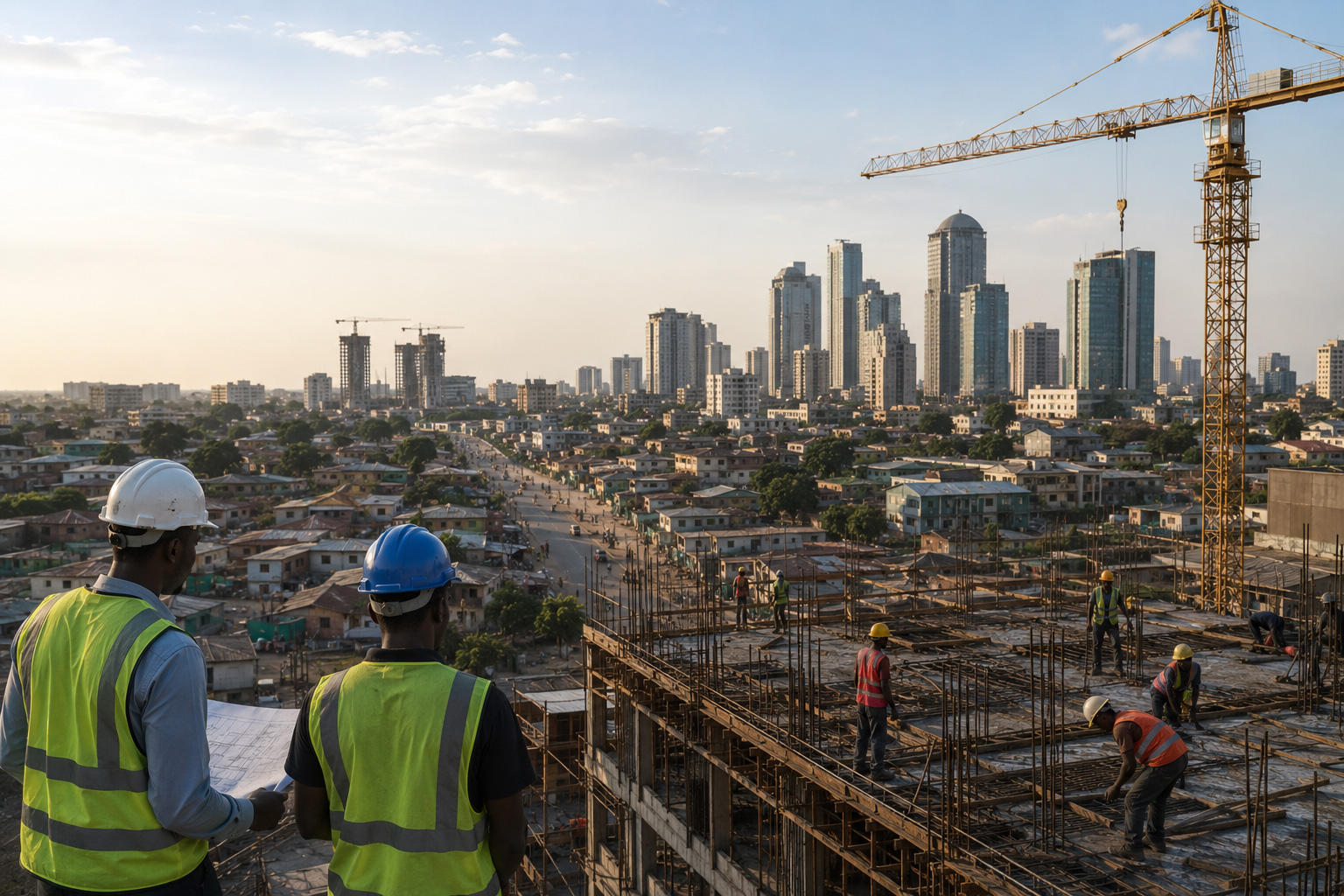
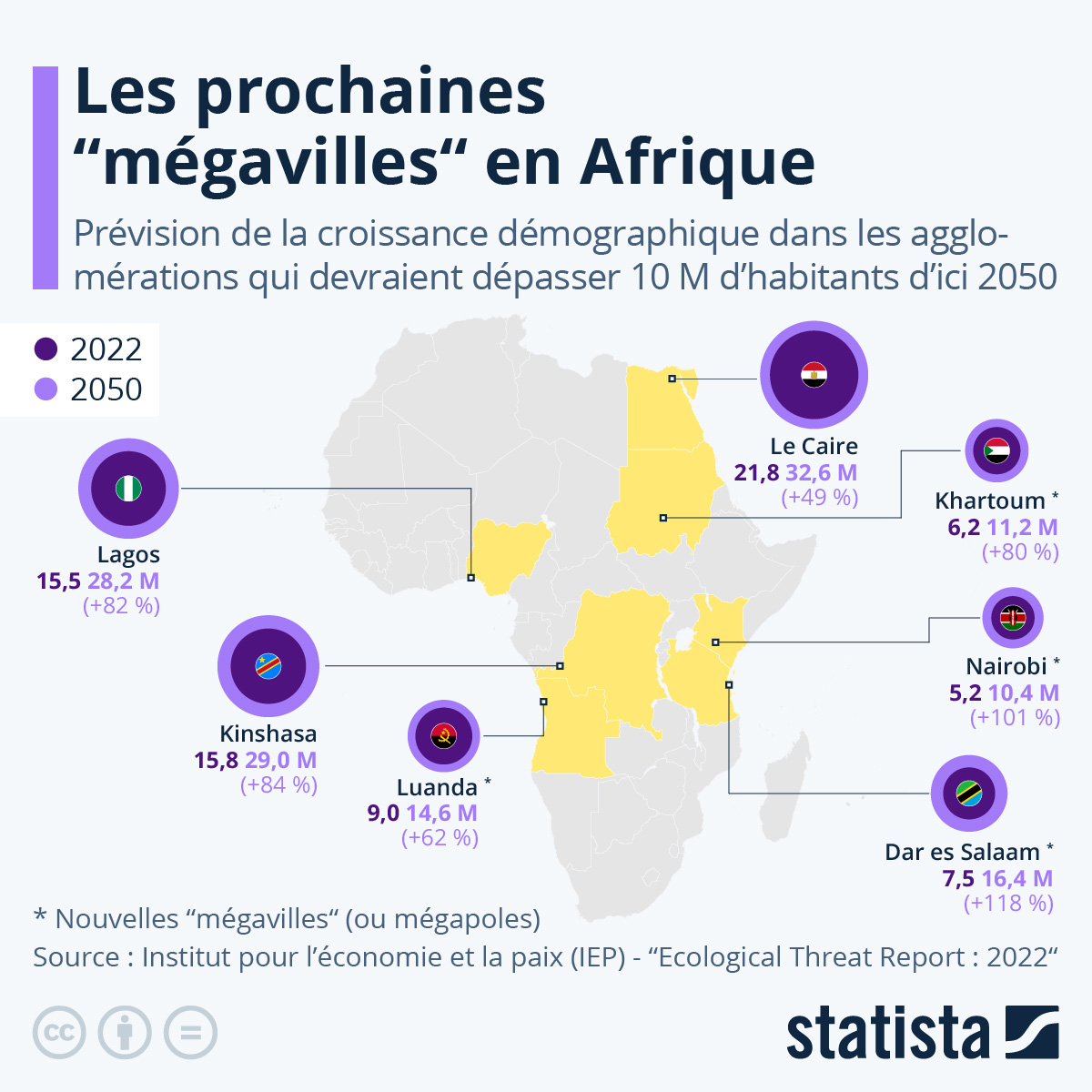
Africa is undergoing an unprecedented urban transformation. According to the World Bank, more than half the world's population now lives in cities, and this trend is set to increase: by 2050, almost 7 out of 10 people will be urban. In Africa, this trend is even more marked: the continent will have more than 1.3 billion people living in cities by 2050, twice as many as today.
This rapid population growth and urbanisation poses major challenges, particularly in terms of infrastructure, housing and public facilities. The construction sector, already booming, is at the heart of this dynamic, offering both economic opportunities and structural challenges to overcome.
A booming economic sector
A fast-growing market
The African construction market is currently worth $58.42 billion and is expected to reach $74.81 billion by 2029, with an average annual growth rate of 5.07 %. This growth can be attributed to a number of factors: the availability of natural resources, investment opportunities in infrastructure and energy, a competitive workforce and a rapidly expanding consumer market.
Large-scale projects
African cities are being modernised at a rapid pace, with flagship projects ranging from imposing skyscrapers to megacities built from scratch. African governments are placing infrastructure development at the heart of their priorities, making construction the continent's most strategic sector. There are currently more than 570 construction projects underway, worth a total of $450 billion. The energy sector alone accounts for over 370 billion dollars of investment, followed by transport (roads, airports, railways) with 280 billion dollars.
The challenges facing a sector in the throes of change
An urgent need for accessible housing
Africa is facing a growing demand for housing, particularly in the major cities. In Nigeria, for example, the shortfall is estimated at over 17 million units, while in Egypt it is around 3 million. This situation offers a major opportunity for property developers and public authorities to develop innovative solutions, such as social housing and low-cost housing.
In Rwanda, for example, the Affordable Housing project aims to build 30,000 affordable homes by 2026, using public-private partnerships and modular construction technologies.
Levers for improvement in a growth sector
To respond effectively to demand, a number of areas for progress are emerging:
- Mobilising finance The investment needs are substantial, but mechanisms such as sovereign wealth funds, green bonds and public-private partnerships are helping to raise capital. For example, in 2023, the African Development Bank has launched a $500 million fund dedicated to urban infrastructure in West Africa.
- Adoption of new technologies 3D printing, eco-friendly materials and project management software optimise costs and lead times. In South Africa, the start-up «Icon» uses 3D printing to build houses in less than 24 hours, reducing costs by 30 %.
- Strengthening basic infrastructure : Improving electricity grids, transport networks and supply chains is essential to supporting growth in the sector. For example, the World Bank-funded regional express train (TER) project in Senegal aims to ease congestion in Dakar and improve access to peri-urban areas.
Training and employment for young people The sector offers enormous potential for creating skilled jobs, particularly for young people. One example is the «Skills for Employment» programme in Kenya, which trains 10,000 young people each year in building and civil engineering trades, in partnership with local companies.
Solutions and opportunities for the future
Innovation and regional cooperation
Faced with these challenges, innovation and regional cooperation are emerging as essential levers. Some countries, such as Tunisia, are already incorporating advanced technologies, such as 3D printing, to reduce construction costs by 30 %. Cameroon, for its part, is banking on public-private partnerships, which today finance more than 25 % of major infrastructure projects.
The rise of smart cities
One striking trend is the emergence of smart cities, intelligent, sustainable towns designed to relieve congestion in large metropolises while offering modern infrastructure. Projects such as Diamniadio in Senegal, Konza City in Kenya and Hope City in Ghana illustrate this dynamic. These initiatives aim to improve the quality of life of local residents while stimulating the local economy.
Economic integration as an accelerator
With the establishment of the African Continental Free Trade Area (AfCFTA), intra-African trade in the construction and public works sector could increase by 52 % by 2040. This greater market integration opens up new prospects for players in the sector, fostering more inclusive and sustainable growth.
Conclusion: the way forward for Africa
Africa is a vast construction site where everything remains to be built: roads, buildings, industrial estates, shopping centres, etc. The property and construction sector is not only a buoyant market, but also a strategic lever for supporting the continent's transformation. By rising to the current challenges and seizing the opportunities offered by innovation and cooperation, Africa can lay the foundations for sustainable and inclusive urban development.
 French
 English